
Syn Final Draft
Cover Letter
I imagined my primary audience as you and my classmates but I also pictured hiring managers and employees who have judged or been judged for how they sound. That shaped my rhetorical choices. I tried to explain studies in plain language, focusing on what listeners heard, what changed in their ratings, and what that means in real settings like interviews and meetings. I opened with academic articles and reports then used Safwat Saleem’s TED talk to show the emotional experience of being mocked for an accent and how his experience fits the previously discussed measurable patterns. With the AccentBias Britain clips, I also tried to write the paragraph so a reader could almost “hear” the social assumptions that come with each voice, even on the page.
The most important shift in my thinking was moving from a simple native versus non-native frame to differences among non-native groups. At first I mainly thought about a general penalty for non-native speakers. As I read more I realized that a French accent, a Colombian accent, an Indian accent, and a Mexican accent do not pay the same price, even though all mark someone as “foreign.” The warmth and competence model helped me see how some groups are coded as smart but cold, while others are coded as friendly but less capable. Tying this to specific studies, like Sumantry and Choma’s work on accent-based stereotypes, gave me a way to describe this pattern more precisely instead of just saying “bias exists.”
Working with multimedia sources made me think differently about language and literacy. Saleem’s TED talk relies on pacing, visuals, and his own voice to build an argument that would not land the same way on the page. The AccentBias Britain audio clips depend on the listener’s ear and the stories they project onto the speaker. The graph from AccentBias Britain uses visual comparison to show a hierarchy of accents that barely changes over decades. To use these in a written essay, I had to describe not only what they contained but how they made meaning. That pushed me to treat literacy as something that crosses modes instead of being limited to printed text.
Concepts from class influenced how I organized the essay. The rhetorical situation framework helped me keep track of exigence, audience, and purpose. The exigence is the gap between workplace claims about valuing diversity and the reality of accent bias in hiring and promotion. My purpose was not just to document discrimination, but to show that penalties differ across non-native groups and that small design changes in evaluation can reduce these gaps. I tried to balance logos, ethos, and pathos by using Geiger’s trust study and Spence’s meta-analysis as logical evidence, institutional sources like AccentBias Britain and the EEOC for credibility, and Saleem’s story and workplace scenarios for emotional weight.
Synthesis was another key concept. Earlier drafts read more like a series of summaries. In revision, I worked on putting sources into conversation. I used Geiger to map how a single non-native accent affects trust, Spence and the graph to show a long-standing accent hierarchy, Timming to connect accent and job type, and Sumantry and Choma to explain how different non-native accents occupy different stereotype profiles within that hierarchy. I also tried to connect multimedia directly to written sources. For example, using Saleem’s withdrawal from speaking to illustrate the longer-term effects that Geiger’s trust scores can lead to.
This assignment also changed my writing process. As I mentioned before, I had to reframe the essay from a general “non-native versus native” question to a focus on differences among non-native ethnic accents. That meant reworking the introduction, reorganizing body sections, and cutting parts that pulled the essay back toward the broader frame. I am still unsure whether my transitions into and out of the multimedia sources are smooth enough and whether I have fully achieved the right balance between describing sources and analyzing why they matter for my specific question. I am also interested in whether the focus on non-native versus non-native differences is consistently clear, or if there are places where it feels like I slip back into a simpler native versus non-native framing. Any feedback on those points, and on where the synthesis feels strongest or weakest, will help me in future projects!
Not One Accent, Many Worlds – Why Non-Native Accents Face Unequal Penalties
Walk into any open office and you will be surrounded by a mix of different Englishs. Some voices carry the flat vowels of the Midwest while others can carry the rhythm of Spanish, Urdu, or Mandarin. Though we say workplaces value diversity, people who speak with certain accents continue to report feeling overlooked in interviews and on the job. My curiosity lies in the depth of that feeling. When we focus on non-native speakers, do accents tied to different ethnic backgrounds differ noticeably in their impact on hiring and day to day belonging at work. And if so, how can we define it.
Before approaching the question it’s important to start with understanding the significance any non-native accent can have in shaping our judgments. In a recent study in organizational behavior, Geiger and colleagues asked hiring decision makers to listen to the same interview answer spoken either in a standard American voice or in Mandarin accented English. The content remained constant and only the sound of the voice changed. Raters then scored the candidate on trust and on different aspects of trustworthiness, such as ability, benevolence, and integrity. Speaking with the Mandarin accent lowered both trust and the ability portion of trustworthiness. Prompts centered around perspectives showed a softer impact but the basic pattern remained, there is a path directly from sound to trust, something that can reasonably impact decisions (Geiger et al.).
A second study builds on this. Spence and colleagues pool many hiring studies that compare standard accents with nonstandard ones and continue to support the idea that standard accented candidates are rated as more hireable. More importantly for my question, the meta analysis considers two main explanations that have been offered. One is processing fluency, the idea that some accents are simply harder to understand which makes listening feel less smooth and harms evaluations. The other is prejudice, the idea that accents cue and activate stereotypes about status and warmth. Spence and colleagues found that fluency does some work but doesn’t carry enough weight to steer the entire pattern. Accentedness and raw comprehensibility are ultimately not reliable predictors of hiring bias, but instead, prejudice and social image explain more of the gap (Spence et al.). This matters because different non-native accents do not carry the same social image. A Mandarin accent, a Mexican accent, and an Arabic accent can be equally clear on a scale of accentedness, yet signal to our brains very different pictures of who the speaker is.
At this point it I feel it helps to actually hear how people react to accents that are not “standard,” even when nothing about the speaker’s competence is known. AccentBias Britain provides short interview-style audio clips for different UK accents. The Estuary English clip, labeled EE, carries features that sit between upper class Received Pronunciation and working class Cockney, often heard as modern and southern without being strongly local. The Multicultural London English clip, labeled MLE, is associated with young multiethnic Londoners and is widely tied in the public mind to working class and ethnic minority communities (AccentBias Britain). If you play the two clips back to back, you can feel how quickly a listener might start imagining different social backgrounds for each speaker, even though the clips only contain the same simple content. That snap move, the face of who people might imagine is behind each voice is exactly what the research above is pointing to. (Open the links to listen).
| https://accentbiasbritain.org/wp-content/uploads/2019/05/MLE_sample.mp3 | https://accentbiasbritain.org/wp-content/uploads/2019/05/EE_sample.mp3 |
Other sources make the unevenness more visible by comparing several foreign accents at once. Deprez-Sims and Morris, in one job interview experiment, asked US participants to evaluate an applicant for a human resource manager role who spoke with either a Midwestern US accent, a French accent, or a Colombian accent. The script and answers were similarly held constant across conditions. The French accented applicant was rated less positively than the Midwestern applicant while the Colombian accented applicant did not differ significantly from either one. Here two non-native accents are heard very differently, even though both mark the speaker as foreign and are easy enough to understand. Again, accent alone is not the full story but the ethnic and national images tied to that accent change how it is heard (Deprez-Sims and Morris).
Diving deeper now, we can look at what kinds of traits people attach to different non-native accents. Sumantry and Choma asked US adults to listen to short clips of Indian, Latinx, Arabic, and Toronto accented speakers and then rate them on warmth and competence. Their results connected to other work showing that East Asians are often stereotyped as more competent but less warm while Latin Americans are more often stereotyped as low in both warmth and competence. Two non-native accents can be equally strong but live in different corners. One may be heard as technically skilled but distant and another as friendly but not very capable. When these stereotypes and trait profiles feed into hiring decisions, the cost of speaking with an accent will not be uniform across ethnic groups (Sumantry and Choma).
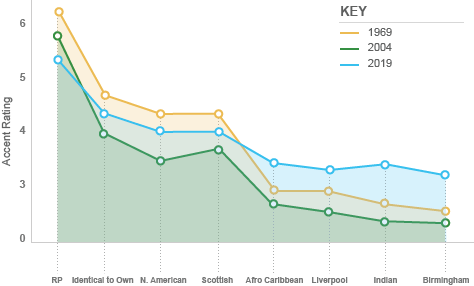
these views prevail and stretch far longer than we often assume
Context can either widen or shrink these gaps. High contact service jobs emphasize warmth and fluency, so accents that are stereotyped as cold or that listeners rarely hear can be punished more in those roles (Spence et al.; Timming). Technical or back office roles put more weight on competence, so accents that are stereotyped as warm but less capable can face a different set of limits. Status can also play a role, as seen in more prestigious roles where decision makers often have an even narrower picture of what professional sounds like, which can raise the penalty for accents tied to groups seen as low status. Gender then adds an entirely additional layer, since non-native women can be sorted into a too nice but not technical box or a competent but cold box in ways that native women in the same field may not experience (Spence et al.).
All put together, these studies point to a more complete answer to my question. First of all, there is a general disadvantage for non-native speakers in hiring. Trust and perceived ability fall when a candidate speaks with a foreign accent rather than a standard one (Geiger et al.; Spence et al.). More interestingly, on top of that general pattern there are large differences across non-native ethnic groups. Some foreign accents, like the French accent in Deprez-Sims and Morris, draw lower ratings while others, like the Colombian accent in the same study, do not show the same impact (Deprez-Sims and Morris). Managers tend to discriminate against Chinese, Mexican, and Indian accented English in customer facing roles, yet the strength of the penalty varies by accent and job type (Timming). Indian, Latinx, and Arabic accents are mapped differently regarding warmth and competence, which means they do not start from the same social baseline even when listeners like them to the same degree on the surface (Sumantry and Choma). Ultimately, equal levels of accentedness do not translate into equal costs.
These differences matter beyond hiring. First meetings, performance reviews, and client calls matter significantly on quick reads of trust and competence. If one non-native accent is coded as more technical and another as more warm, they will often be slotted into different roles and tasks inside the same organization. East Asian accented English may lead to assumptions about analytic skill but also about social distance. Latinx accented English may lead to assumptions about friendliness but also about lower status. When certain accents are seen as less professional, people who speak with those accents may be interrupted more and given fewer chances to lead. Over time that shapes who feels like they belong and who has access to advancement (Sumantry and Choma). Saleem’s talk matches this long tail effect on a personal level. When he felt his accent made him a target, he started removing his own voice from his work which is a small scale example of how pressure over time can start shrinking participation (Saleem). (Please watch 4:01-5:04)
All of this has clear stakes for fairness and for performance. A hiring manager impacted by lower trust scores for Mandarin or Mexican accented English even when the content is strong leaves talent on the table (Geiger et al.; Timming). A team that always sends the same safe sounding accent to client meetings narrows who gets credit and visibility. Workers whose accents mark them as less American may feel pressure to code switch or to withdraw from speaking up. None of this helps the quality of decisions or the sense of belonging at work and it also brushes up against national origin protections when accent is not actually blocking job performance (U.S. Equal Employment Opportunity Commission).
The research does however point to small changes that can make these judgments more accurate and more fair. One step is to separate content from delivery in early screens. For example, ask raters to write down the main points they heard before they score the candidate and then score that recall on accuracy. This forces their attention primarily on substance (Spence et al.). Another tip is to use short rubrics that focus on job relevant skills, which similarly frames hirers’ focus during interviews (Spence et al.). A third step is to add perspective based prompts like the ones Geiger tested, asking raters to imagine working with the candidate and to name two ways the person could add value to the team (Geiger et al.). AccentBias Britain finds a similar effect when evaluators are reminded about bias before judging voices, which reduces rating gaps across accents (AccentBias Britain). Finally, in jobs that require heavy client talk, employers can offer a brief orientation on common accent features and shared habits for asking clarifying questions. Item such as the EE and MLE clips can even be used in training to make that adjustment period more conscious and less loaded. These changes are small but accept that speech is part of a person and that people from different non-native groups should not have to erase that part of themselves to be heard fairly.
There is a measurable difference in how different non-native ethnic accents shape hiring and belonging. Part of that difference comes from ethnic stereotypes around trust and perceived ability and part comes from how job roles and status expectations interact with those stereotypes. The studies do not say that every listener will react the same way or that every accent group will face the same barrier in every setting. They do show a pattern that is strong enough to matter and flexible enough to change. That is the hopeful part. It means we can design hiring and early team life so that sound does not drown out substance, not only for non-native speakers in general, but also across the many non-native ethnic groups that share the same workplaces.
Works Cited
Geiger, Mingang. “Accent Speaks Louder than Ability: Elucidating the Effect of Nonnative Accent on Trust.” Google, Google, June 2023, scholar.google.fr/citations?view_op=view_citation&hl=th&user=73eKbTYAAAAJ&citation_for_view=73eKbTYAAAAJ%3ALkGwnXOMwfcC
Deprez-Sims and Morris as mentioned in: Sener, Meltem Yilmaz. “English with a Non-Native Accent as a Basis for Stigma and Discrimination in the US.” E-International Relations, 2024, www.e-ir.info/pdf/92027
Spence et al. as mentioned in: Queensland, University of. “Research Reveals Accent Discrimination in Hiring.” Phys.Org, Phys.org, 24 Nov. 2022, phys.org/news/2022-11-reveals-accent-discrimination-hiring.html
Sumantry, David, and Becky L. Choma. “Accent-Based Stereotyping, Prejudice, and Their Predictors.” Personality and Individual Differences, vol. 179, 2021, article 110894. ScienceDirect, https://www.sciencedirect.com/science/article/pii/S0191886921002695
Timming, Andrew R. “The Effect of Foreign Accent on Employability : A Study of the Aural Dimensions of Aesthetic Labour in Customer-Facing and Non-Customer-Facing Jobs.” The Effect of Foreign Accent on Employability : A Study of the Aural Dimensions of Aesthetic Labour in Customer-Facing and Non-Customer-Facing Jobs, 1 June 2017, research-repository.st-andrews.ac.uk/handle/10023/8724
U.S. Equal Employment Opportunity Commission. “National Origin Discrimination.” U.S. Equal Employment Opportunity Commission, www.eeoc.gov/sites/default/files/migrated_files/facts/fs-nator.pdf
Saleem, Safwat. “Why I Keep Speaking Up, Even When People Mock My Accent.” TED, July 2016, https://www.ted.com/talks/safwat_saleem_why_i_keep_speaking_up_even_when_people_mock_my_accent
“Accents in Britain.” Accent Bias Britain, 2019, https://accentbiasbritain.org/accents-in-britain/

This entry is licensed under a Creative Commons Attribution-NonCommercial-ShareAlike 4.0 International license.

