
L&L Final Draft
Cover Letter:
In Phase 1 I learned to think about writing as a set of choices shaped by audience, purpose, and context. Not just what happened but why it matters and how to deliver it. The main assignments were the Language & Literacy narrative which I made about my grandmother, the spoken Translation 1 version of that narrative, and the rhetorical situation worksheets that pushed me to revolve my writing around concepts like exigence, genre, and audience. Together these helped me better infuse clear, personal stakes into my writing rather than just tell my story.
I wrote with two audiences in mind. You, my professor, (who will evaluate clarity, reflection, etc) and classmates (who might not share my background but can still connect to themes such as family, language, and belonging). That meant using solid, sensory detail to invite readers into the room before layering on the emotional problem. I tried to keep the vocabulary accessible and the sentences mostly short, letting rhythm carry the feeling of halting conversation. I also used repetition (especially the recurring sound of the fan in my spoken translation) to signal that feeling of stuckness of translation and the delay between a question in Pashto and an answer in English. When I shift to the line “I want voice, not echo,” I’m naming the conflict directly for anyone who may have missed it had it only stayed in imagery.
Before this unit I thought of language and literacy as skills you either have or don’t. The narrative showed me how literacy is instead more social and embodied. Even without vocabulary I read posture, tone, and timing. I “listen for meaning in the rise and fall” and answer a beat late. That beat late became a core symbol in my narrative, it’s a time gap that stands in for the cultural gap I try to convey. Writing the piece helped me see that I’ve built somewhat of a personal literacy around my grandmother (gesture, laughter, eye smile) that sits next to but not inside Pashto. That realization gave the narrative its purpose, to highlight the cost of living between languages while still trying to honor the intimacy that survives there.
I tried to cut explanatory sentences and instead trust the scene building to do the heavy lifting showing the relay of Q&A through my mom. Another detail I put some thought into was how I organized time. The beginning opens mostly in stillness (light, fan, click), then the pace accelerates a bit with speech and translation, then slowing at the end for the laugh and the “beat late.” I tuned the vocabulary for consistency and accessibility, removing rare words and maintaining a plainer style that I felt fit the subject better. Finally, for the spoken translation, I attempted to repeat consonants and short lines to mimic the impact the click has.
There, of course, are still things I want to work on. I want to vary sentence length more intentionally in the narrative version to match the emotional rises and falls I found were present when making the spoken piece. I also hope to experiment with intertwining languages, letting one or two Pashto words enter the text when context makes them legible to capture voice without offputting readers. And I’m considering whether a brief reflective statement belongs at the end or whether holding on the late laugh is stronger. Right now I prefer the latter, ending in that “beat late” feels more impactful.
The biggest shift I’ve felt is that I now plan more with rhetorical terms. Throughout the phase I tried to ask myself questions as I approached my own work. What is the exigence? Who is the audience? Which genre best serves the purpose? What constraints shape this situation? Those questions guided my narrative and my spoken translation and they gave me tools I can carry to other assignments. To me, Phase 1 was all about how style isn’t just present to decorate our work but where we can place meaning. The sound of a fan can argue something. A pause could be my thesis. That’s a lesson I hope to bring forward.
(There is a link in the first sentence of paragraph two, don’t miss it!)
L&L:
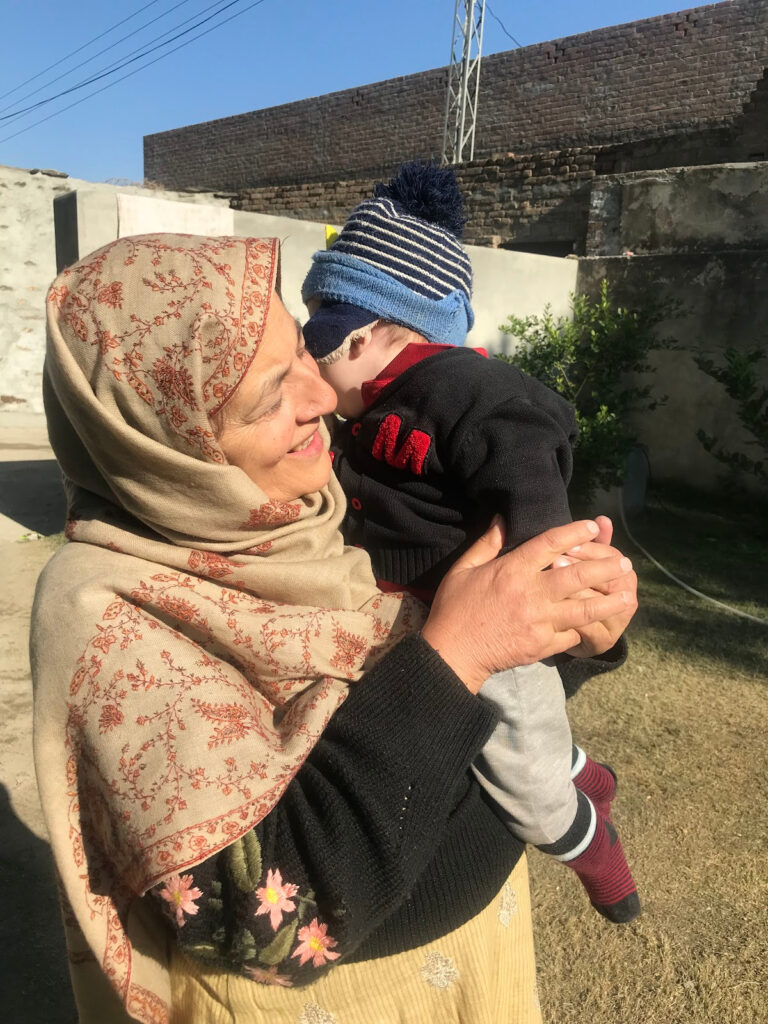
It was a hot summer afternoon and I was sitting in the living room with the curtains half closed, a bar of light cutting across the floor. A fan clicking every few seconds. My laptop’s glow lit my hands and warmed my wrists. From the kitchen came the soft hiss of the kettle and the murmur of my mom’s voice. She was on a call with my grandmother in Pakistan, but I pretended not to notice. Some part of me hoped she wouldn’t call me over, that I wouldn’t have to sit through another strained call, but eventually she did. The connection crackled as she switched to video and then my grandmother’s face filled the screen framed by her scarf. She smiled so big when she saw me, her eyes soft and kind, the kind of smile that makes your own face lift before you think about it.
She started speaking to me in Pashto, words fast and full of energy. I glanced at my mom. As usual, I didn’t understand. My mom leaned in, still smiling, and translated: “She’s asking how you are, how school is going.” I nodded quickly, put on a smile, and answered in English, “I’m fine, school is good.” My mom carried my words back across that small gap, turning them into a language that wasn’t mine. The whole time, my grandmother kept smiling, nodding, repeating little phrases I didn’t know. I tried to follow the rhythm, to read her face and hands, to catch any meaning in the rise and fall of her voice. Inside though I felt the gap grow heavier. I wanted to respond to her, not through someone else. I wanted her to hear my voice, not my mom’s.
Then a moment stuck. My grandmother began a longer story, her voice softened, her hands lifted into the frame, light catching on her glasses. The sentences rolled forward and folded back on themselves. She ended with a laugh. It was round and warm, the kind that makes you want to laugh as well. I didn’t understand a single word. I laughed anyway, a moment too late. The fan clicked in the space between her laugh and mine. My mom glanced at me ready to explain if I wanted her to. I kept smiling. Explaining would slow everything down. I laughed again, brighter than I felt, hoping the sound would cover the fact that I was guessing.
Details popped out that I probably wouldn’t have noticed if I’d been inside the words. The way my grandmother looked slightly above the camera when she searched for a thought, the especially deep wrinkle by her left eye, a metallic dish catching light on a shelf behind her. When the call ended, I sat for a moment, watching the screen fade to black and show my own reflection, my mouth still set in a slight smile. The shape of her laugh replayed in my head, but not the joke that caused it. That was what stung. Not the not-knowing on its own but the performance that followed. The way I had to pretend I understood so the moment wouldn’t break. It made me feel like an echo in my own family, close enough to respond, but never quite in time.
This wasn’t the first time I’ve felt that distance but keeping the focus on the call makes it clearer. So much closeness lives in the small parts of conversation, the quick joke, the throwaway detail, the greeting that lands exactly right. In immigrant households, English can take up a lot of space at school, online, and with friends, and the home language can slide to the edges without anyone deciding it should. The result is simple and complicated. You still connect but through a relay. You say something, someone else carries it, and it arrives where it’s supposed to go. It works but it also changes the feeling.
Thinking about that call makes me think about what language actually does beyond passing information. It’s timing, humor, memory. It’s the way a person sounds when they say your name. It’s the small courage to interrupt and tease and ask a quick follow up because you already know the word you need. When you don’t have that, you can still smile and answer the easy questions, but the better parts, the joking, the side comments, the stories that weave in and out, slide just out of reach. You’re there but a step behind.
I kept returning to my grandmother’s laugh; she was happy just to see me. That should be enough and sometimes it is. But I want to meet that happiness on time, not a beat late. I want the next call to have one moment where I don’t borrow my mother’s voice. I don’t need a speech. I need a single sentence that lands the first time, something simple I can say myself and understand the answer to as it comes back. I imagine hearing her laugh again, not as a cue for me to follow, but as something I get to share for the right reason. The glass between us would still be there, likely, but thinner, and I’d at least know exactly why we were both laughing.

This entry is licensed under a Creative Commons Attribution-NonCommercial-ShareAlike 4.0 International license.

